

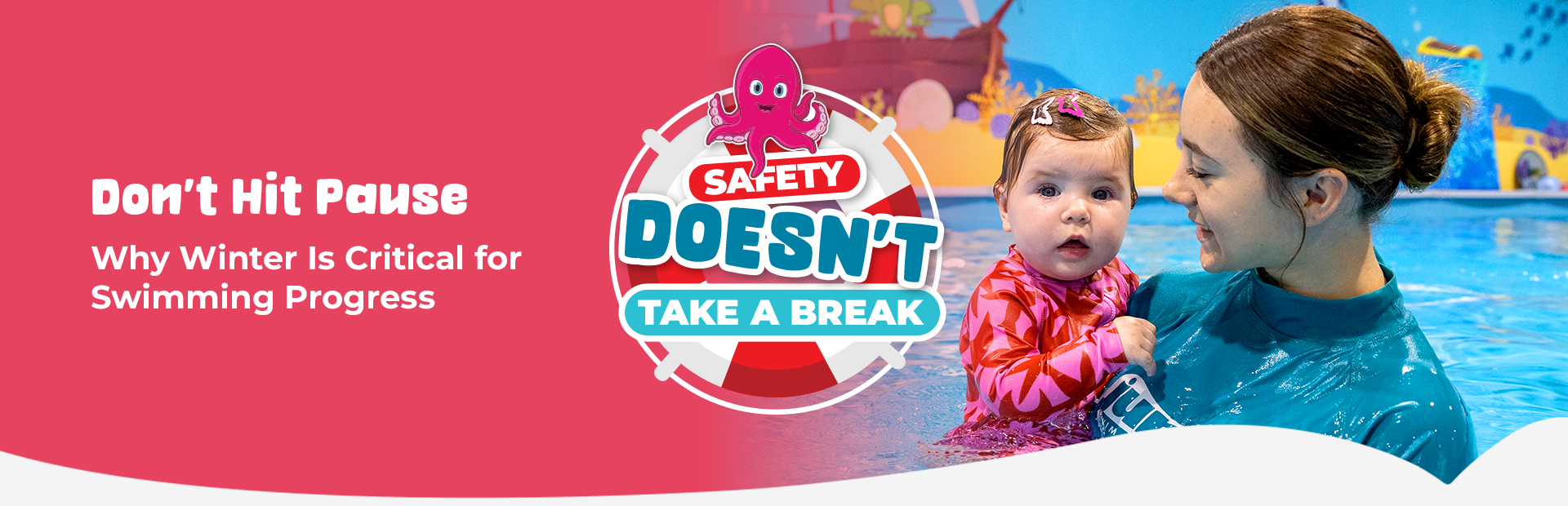
What 6 Weeks Off Does to Swim Skills in Young Children
For young children, swimming is not just a recreational activity it’s a life‑saving skill. But what many parents don’t realise is how quickly those skills slip when lessons stop, especially over winter. Even a short break of six weeks can undo months of progress. Here’s why continuity matters.
Skill Regression Happens Fast in Early Childhood
Young children rely on repetition and routine to build strong aquatic foundations. When lessons stop, their confidence, breath control, floating ability, and propulsion skills can decline noticeably.
Australian research shows:
- 45% of children have poor or only average floating ability, a vital safety skill.
- 31% of children aren’t currently enrolled in lessons meaning many already start behind.
- 65% of 6‑year‑olds who fail to meet national swimming standards are not in regular lessons, showing a direct link between attendance and skill development.
Six weeks may seem small to an adult but to a child’s developing brain and body, it’s long enough for learned skills to fade.
Water Safety Skills Decline Without Practice
Drowning can occur quickly and quietly, even in shallow water.
For every child who dies from drowning in Australia, seven more are hospitalised from non‑fatal incidents.
Many of the skills learned in lessons floating, independent turns, submersion recovery need ongoing reinforcement. A break reduces reflex response and slows reaction time in unexpected situations.
Confidence Drops Before Skills Do
Children thrive on consistency. When lessons pause:
- Confidence decreases
- Hesitation increases
- Fear of water returns
- Familiar routines are forgotten
By the time they return to lessons after a 6–8 week winter break, many children behave as though they’re “starting again.”
Missing Winter Lessons Creates a Summer Safety Gap
Australian summer brings the highest exposure to water but Winter is when skills quietly erode.
Data shows:
- Drowning deaths increase tenfold between ages 10–20, aligning with declining swimming competency from inconsistent participation.
When children miss Winter lessons, they enter Summer less prepared, making water play riskier.
Short Breaks = Long Recovery
Instructors consistently report that children need 2–3 sessions just to regain confidence and another few to restore lost technique.
For toddlers and preschoolers, six weeks off can mean:
- Reduced breath control
- Poorer buoyancy
- Increased clinging
- Slower progression
- Setbacks in survival skills
Stopping lessons for six weeks may feel convenient in winter, but the cost is real: lost skills, reduced confidence, and greater risk.
The safest children this Summer are the ones who keep swimming through Winter.
Enrolling your kids in our swimming program will ensure they’re water safe all year round.
Get in touch with your local JUMP! Swim school today, to get started!